Why Choose Us
Quality products: Our company is committed to delivering high-quality products through their advanced manufacturing processes and strict quality control measures.
Competitive Pricing: We offer competitive pricing without compromising on quality, making our products accessible to a wide range of customers.
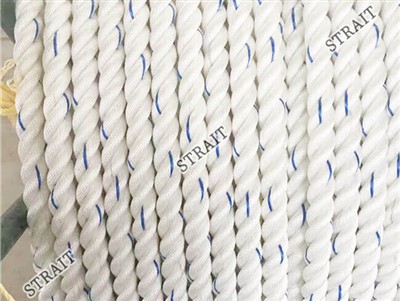
Wide Product Range: The Company can produce cords and ropes with a diameter from 2mm~300mm and in a wide variety of structures and types, including 3 strands, 4 strands, 6 strands, 8 strands, 12 strands, 16 strands, and double-layer braided 24 strands, 32 strands, 36 strands, 48 strands, etc., which have been widely used in deep sea mooring, marine engineering, ocean transportation, national defense and military industry, port towing, ocean fishery, mariculture, water conservancy engineering and special equipment and other fields.
Customer Service: In the pre-sales phase, we are committed to providing comprehensive consultation and customization services to ensure you choose the most suitable rope products for your needs. During the in-sales phase, we maintain close communication with clients to ensure smooth order processing and deliver high-quality products and services. After-sales service is our priority, ensuring clients receive optimal support and satisfaction throughout product usage.
Definition of Carbon Fiber Surf Rope
Carbon fiber surf rope is a must-have equipment for every surfer! It is an innovative and high-quality product that is designed to enhance your surfing experience. Carbon fiber is a material that is known for its strength and durability, which makes it an ideal material for a surf rope. Carbon fiber surf ropes provide better grip, control, and stability, making it easier for you to execute your maneuvers and improve your overall performance. When surfing, the most important thing is to have complete control over your board, and a carbon fiber surf rope provides just that.


Strength and durability
Carbon fiber is a material that is known for its strength and durability, which makes it an ideal material for a surf rope. It is designed to withstand the harsh sea environment and provide you with a reliable tool that you can rely on for years to come. When surfing, the most important thing is to have complete control over your board, and a carbon fiber surf rope provides just that.
Lightweight
Another advantage of a carbon fiber surf rope is that it is lightweight. This means that it will not add any extra weight to your board, which can help you to maintain your balance and stability. The rope is also easy to handle and maneuver, which makes it a practical and convenient tool to use when surfing.
Firm and secure
One of the key benefits of a carbon fiber surf rope is that it provides better grip and control of your board. The rope is designed to offer a firm and secure grip, allowing you to execute your maneuvers with ease. This is especially important for beginners who are still learning the basics of surfing. With the help of the rope, they can build up their confidence and improve their performance.
Variety of colors and designs
Carbon fiber surf ropes come in a variety of colors and designs, so you can choose one that best suits your personality and style. You can opt for a vibrant and colorful design, or a more subdued and classic look. This makes it easy to find one that matches your preferences and adds a touch of style to your surfing equipment.
Affordable
Carbon fiber surf ropes are also very affordable. Even though they are made from a high-quality material, they are priced competitively and are accessible to everyone. This makes them an excellent investment for anyone who wants to improve their surfing skills and enhance their overall experience.

Carbon fiber surf rope can be up to ten times stronger than steel. Though carbon fibre is incredibly strong, one of its most valuable features is its lightness. Along with being stronger, carbon fiber surf rope is five times lighter than steel. This makes it a much more versatile material and allows it to be used in scenarios where steel simply would not be appropriate due to its weight. For its strength, durability and lightness, carbon fiber surf rope is commonly used in a wide range of commercial applications such as in the aircraft and automotive industries.
How to Keep a Carbon Fiber Surf Rope from Fraying
No matter what task you're using carbon fiber surf rope for, there is always the issue of the ends fraying and the rope losing its shape and strength. This can be extremely irritating, especially if you have spent a long time carefully selecting the type of carbon fiber surf rope required for a specific task.
Determine the rope's fibre
There are several different types of carbon fiber surf rope available on the market all made from varying different fibres. To figure out how to effectively stop your rope from fraying, first determine if it is made from natural fibres such as hemp or is man-made such as polyester.
Burn the ends
If your carbon fiber surf rope is plastic, then burning the ends is the most effective solution to the fraying process. By gently burning the ends, the plastic in the fibre melts and fuses together preventing any more strands coming loose.
Tape the ends
One of the easier solutions and one that suits natural and man-made fibres, tape is a fantastic way to stop carbon fiber surf rope from fraying. Use duct tape or electrical tape to carefully cover the ends. You may need several pieces that overlap each other to keep the loose ends from escaping. Use a wide, flat piece of tape to fold over the top and then secure it in place by wrapping the rest of the carbon fiber surf rope. Go slightly below the fray to create a more polished look.
Wrap the ends
A classic sailing trick, wrapping the ends of rope with whipping twine is extremely effective. Use a whipping knot and secure the end of the carbon fiber surf rope. To help keep it in place and secure effectively, you can also gently melt the twine as it is made from a wax coating. This provides a hard coating around the ends of the carbon fiber surf rope and seals in in place.
Carbon fiber surf ropes are high-strength fibers having ~ 5 μm diameter and constitute mostly carbon atoms. Compared with other fibers, these carbon fibers have several advantages, including high mechanical strength, high stiffness, lightweight, very low thermal expansion, and superior chemical resistance. Due to these superior properties, carbon fiber surf ropes have found application in defense, aerospace, automobile, civil engineering, motorsports, and military, along with other allied fields. Yet, these fibers are comparatively expensive compared with similar fibers such as plastic fibers or glass fibers. Carbon fibers from electrospinning technique and composites developed from carbon fibers are used in shielding applications.
Carbon fiber surf ropes in various forms are usually incorporated with polymeric materials (matrices) to develop composites. When impregnated with available suitable plastic resin and molded, it converts to an advanced carbon fiber-incorporated polymer composite, which has a very high specific strength, and is very rigid even though with little brittleness. Carbon fiber surf ropes are mostly mixed with other relevant carbon materials to form superior-performing carbon-carbon composites, which generally have better properties and performance.
• Always keep the carbon fiber surf ropes in a clean and dry place.
• Avoid exposing them to direct sunlight and extreme temperatures.
• Do not drag carbon fiber surf ropes over rough surfaces or dirty grounds, as dirt can penetrate between the fibers and cause abrasion damage.
• Always keep carbon fiber surf ropes away from chemicals. If you plan to keep the ropes in storage for extended periods of time, wash them first in fresh water. Salt and dirt will reduce a rope's life spa
How to Select a Suitable Carbon Fiber Surf Rope


Strength
Sufficient strength is necessary, but most good-quality carbon fiber surf ropes should have an adequate break load if you select the correct diameter.
For cruising yachts, 100% polyester lines should be suitable, but a dyneema core will deliver a higher break load and reduce the strain compared with the applied strain.
However, for any given force, a stronger line is subjected to a smaller percentage of the rated break load resulting in a better safety factor.
The advantage of reducing the rigging load proportionally is to lessen any stress on the fibres and extend a rope's working life.
Upsizing a line to achieve a greater break load may be restricted by the size of the blocks, clutches, and organisers in your deck layout or on your mast.
Durability
Uv is the enemy. All rope fibres degrade when exposed to the sun for prolonged periods. The speed at which the deterioration occurs depends on the rope you select.
Happily, polyester and dyneema both have excellent natural resistance to the sun's harmful rays. Carbon fiber surf rope also impregnate dyneema with a polyurethane coating to enhance their resilience. Counteracting uv deterioration should be a significant consideration for yachts in the mediterranean and the tropics.
Abrasion resistance
A working rig will continually cause natural wear on your lines. This includes all the sheaves, blocks, and clutches. Any rope routing system not specified and aligned correctly will induce unnecessary wear. Carbon fiber surf ropes that make any contact with the deck or extraneous hardware as they pass through the system will be subject to unnecessary damage from chafing, scuffing, or snagging.
Anti-chafe characteristics depend on the base filaments or yarns employed; the method used to twist the threads into strands, and the finished structure.
Salt ingress is inevitable and can lead to internal abrasion. Regularly washing your lines in fresh water to purge them of the salt will help to prolong a rope's working life.
Comfort and handling
The carbon fiber surf rope, the finished structure construction, and the line diameter combine to determine how comfortable a line is to handle. Halyards are static for long periods, but when hoisted or dropped, there will be plenty of line to stow.
Coiling and hanking - balanced braiding is key to producing a non-kinking rope that won't end in a snarl-up with repeated twisted looping. Braided and carbon fiber surf ropes should be allowed to fall naturally into a figure of eight in your hand to ensure that you are not introducing unwanted rotation into the rope, which will culminate in that dreaded twisted tangle you are trying to avoid.
It is worth noting that a closer weave yarn structure improves wear resistance, but by the same token, it will be less supple.
Clutches
A solid, round, and firm braid on braid construction will provide a good grip in clutches which is essential to prevent slippage.
The Company can produce cords and ropes with a diameter from 2mm~300mm and in a wide variety of structures and types, including 3 strands, 4 strands, 6 strands, 8 strands, 12 strands, 16 strands, and double-layer braided 24 strands, 32 strands, 36 strands, 48 strands, etc., which have been widely used in deep sea mooring, marine engineering, ocean transportation, national defense and military industry, port towing, ocean fishery, mariculture, water conservancy engineering and special equipment and other fields. Most of the ropes were shipped to Southeast Asia and European and American markets and win unanimous praises from different users at home and abroad.
The company attaches great importance to the research and development of new technologies and products, and it has established industry-university research cooperation relationships with various higher education institutions as well as signed long-term technology research and development agreements with a national "Thousand Talents Plan" team. Currently, it has 2 national invention patents and 30 utility model patents.

Certificates

Ultimate FAQ Guide to Carbon Fiber Surf Rope
Hot Tags: Heavy Duty PP Fiber Rope, China Heavy Duty PP Fiber Rope manufacturers, suppliers, factory, Super Fiber Ropes, Blue Marine Rope, HMPE Fiber Rope, Basalt Fiber Marine Rope, Teufelberger Fiber Rope, Cellulose Fiber Rope